

Heritage Month is a time when South Africans come together to celebrate their roots through food, music and shared traditions. From fragrant Cape Malay curries and traditional Zulu samp and beans, to Afrikaans melktert, Indian-spiced bunny chow and classic Xhosa umngqusho, Heritage Month gives us a chance to celebrate our differences by bringing people to the table — literally. Each dish tells a story about where we come from and where we’re going as a nation.
Here the Capsicum chefs have shared some of their recipes to encourage everyone to cook along and explore the diverse tastes of South Africa from their own kitchens.

Chef Nandile Mtshaha’s Izinkobe
“Izinkobe were often made in large clay pots and shared during gatherings, harvest festivals, and communal work days. The dish symbolised togetherness and sharing, since it was inexpensive, filling and nourishing. Among rural families, izinkobe were (and still are) a go-to meal during times of limited resources, because dried maize is easy to store and lasts a long time.”
Ingredients
1kg mielie (corn) kernels
500g dry sugar beans
2 onions
2 garlic cloves, minced
½ cup of oil
1 tsp spices paprika,
1 tsp cumin,
1 tsp masala
½ tsp chilli flakes (or more for spicier option)
water
2 stock cubes (chicken, beef or veg)
Method
Rinse and soak the mielie kernels and the sugar beans in cold water and leave overnight.
Drain, then tip into a large pot and cover with water. Boil until al dente then add the stock cubes and continue to cook until both the beans and kernels are soft. In a separate pan, sauté the onions and garlic until translucent. Add the spices and cook on medium heat for a minute, stirring to infuse spices. Add onions and spices to the beans and mix. Taste, and if more seasoning is needed, add salt and pepper. Simmer until ready to serve. For a spicier dish, Izinkobe can be garnished with finely chopped chillies.

Chef Trish Naidoo’s Fish Biryani
“This flavourful South Asian dish made with spiced fish, aromatic basmati rice, and fragrant herbs combines the richness of marinated fish with layers of rice and can be served with raita or salad.”
Ingredients
For the marinade:
1 tsp garlic paste
1 tbsp masala
1 tsp turmeric
1 tbsp oil
Juice of half a lemon
Salt to taste
For the rice:
1 cup long-grain or basmati rice
1 cinnamon stick
1 bay leaf
2 cardamom pods
2 star anise
Salt to taste
Egg yellow food colouring
For the biryani
500g fish (about 8 small pieces)
½ cup vegetable oil
2 onions, finely sliced
1 sprig curry leaves
2 green chillies
3 cloves garlic
2 tsp ground cumin
1 tsp ground coriander
¼ tsp ground fennel
2 tsp masala
4 large roma tomatoes, skin removed and pureed
4 sprigs thyme
4 sprigs mint leaves, chopped
Handful of chopped coriander
Salt to taste
2 tbsp butter
4 boiled eggs (optional) or fish roe
Method
Marinade: Combine the fish with the masala, garlic paste, turmeric, salt, and lemon juice. Refrigerate for 1 hour.
Rice: Rinse the rice well. In a pot, cover the rice with water and add the cinnamon stick, bay leaf, cardamom pods, star anise, and salt. Cook until the rice is half-cooked, then drain the excess water. Sprinkle with a little egg yellow food colouring, cover, and set aside. When ready to use, fluff with a fork to achieve a mix of shades.
Biryani: Sear the marinated fish lightly on both sides (avoid overcooking as it will bake later). In the same oil, sauté one finely sliced onion with thyme, curry leaves, mint, and green chili until golden. Add garlic, then stir in cumin, coriander, fennel, and masala. Cook for 2 minutes. Add pureed tomatoes and leftover marinade. Season with salt, cover, and simmer until the tomatoes are cooked and the oil rises to the surface (10–15 minutes). This forms the masala. Assemble the biryani by layering masala, fish, and rice in sequence. Fry another sliced onion in butter and a touch of oil until crisp. Spread over the rice. Cover with foil and bake at 180°C for 20 minutes. Once the aroma of spices fills the air, your fish biryani is ready. For a chef’s twist, grilled prawns can be added using the same marinade.
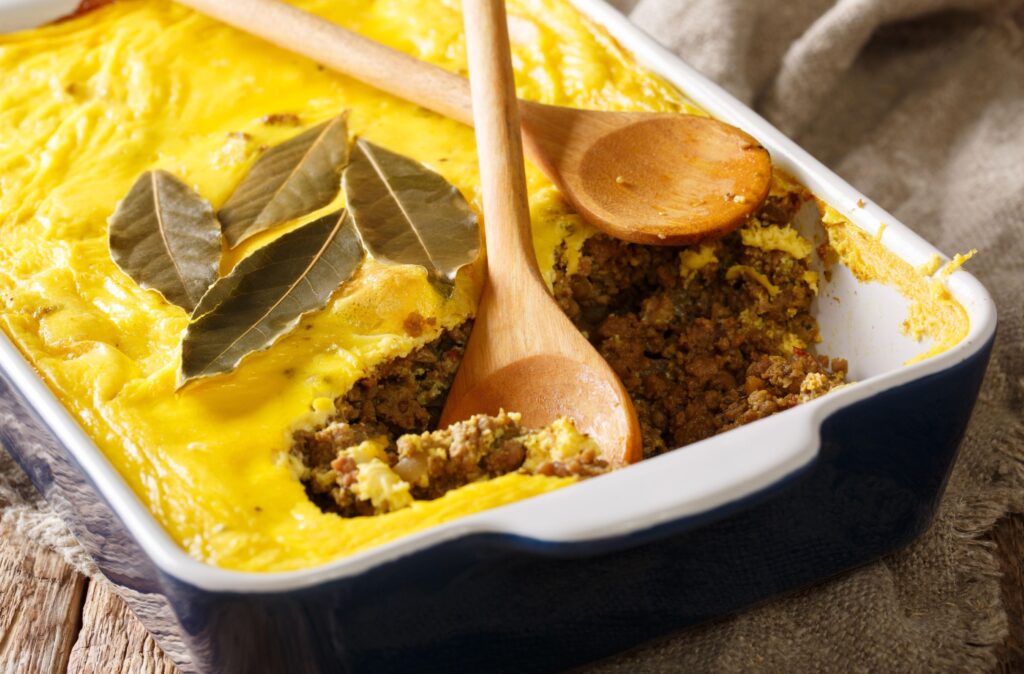
Chef Amir Nizam’s Bobotie (serves 6)
“Bobotie is a traditional South African dish, a flavourful fusion of Cape Malay influences made with spiced minced meat baked with an egg-based topping. It typically includes ingredients like curry powder, chutney, raisins, and soaked bread for a sweet-savoury flavour and is often served with yellow rice and slices of banana.”
Ingredients
2 tbsp oil or butter
2 onions, finely chopped
2 garlic cloves, minced
1 kg beef or lamb mince
2 slices white bread, soaked in ½ cup milk
2 tbsp curry powder
1 tsp turmeric
2 tsp ground coriander
1 tsp ground cumin
2 tbsp fruit chutney
2 tbsp apricot jam (optional)
2 tbsp vinegar or lemon juice
¼ cup raisins or sultanas
2 eggs, lightly beaten
Salt & black pepper
For the Custard topping:
2 eggs
1 cup milk
Bay leaves
Method
Preheat oven to 180°C. Grease a baking dish. Fry onions and garlic in oil until soft. Add curry powder, turmeric, cumin, coriander and cook until fragrant. Add mince and brown well. Season with salt and pepper. Squeeze excess milk from bread, mash bread and stir into mince. Add chutney, jam, vinegar, raisins and 2 beaten eggs. Mix well. Spoon into dish and smooth the top. Whisk eggs with milk, season lightly, and pour over mince. Place bay leaves on top. Bake for 40 to 45 minutes until topping is golden and set. Serve with yellow rice, sambals and extra chutney.

Chef Tendani Tshokovhi’s Phutu
“Phutu is a coarse, crumbly maize meal porridge served with amasi which is fermented sour milk. It is a staple traditional and yet simple dish, often enjoyed with a dollop of cream or butter and for a bit of taste some people add a sprinkle of brown sugar.”
Ingredients
50g maize meal
15g butter
1 tsp salt
120ml water
Method
In a medium size pot, boil water, butter and add salt . Add the maize meal gradually, mixing with a fork. Stir the pot after 15 minutes and start breaking the lumps. Cover the pot , reduce the heat and cook for 20 minutes to allow the phutu to steam. Fluff with a fork to create a crumbly texture. Serve with Amasi and cream.